WELCOME TO
ST. GEORGE’S CAY POWER COMPANY
Since 1982, our mission is to provide safe, reliable, and affordable electricity to support our 1,500 local families and businesses.
St. Georges Cay Power Company (SGCPC) serves Customers on St. George’s Cay (Spanish Wells), Russell Island, West End Cay, Charles Cay, and Royal Island.
SGCPC is locally owned, and those Shareholders, along with the Officers and Employees, are our Neighbors in our Community.
About US
SGCPC is an Authorized Public Electricity Supplier (APESL-18-0003) operating under a 20-year license granted by the Utilities Regulation and Competition Authority (URCA) on 1 December 2018, pursuant to the Bahamas’ Electricity Act of 2015.
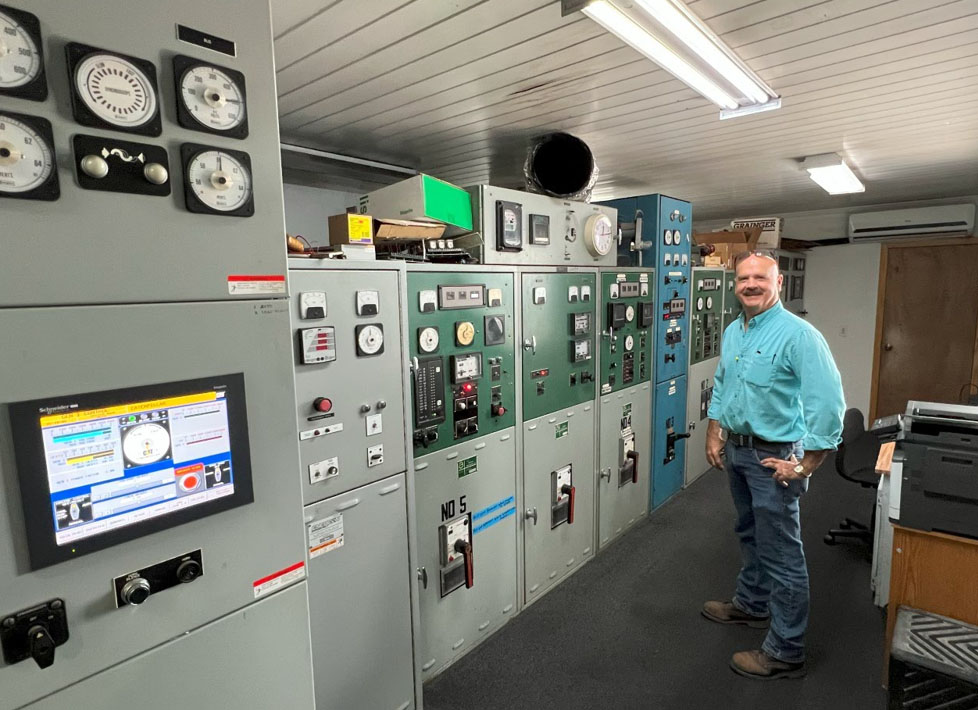
SGCPC maintains the generation and distribution systems in the Service Area. This includes the powerplant on Russell Island, the two medium-voltage transmission networks, the transformers and distribution wiring, submarine cabling, and Customer meters and premise interconnections.
Our Customers enjoy exceptional reliability because of our construction, maintenance, and operational standards and controls. Non-weather-related power outages here are very infrequent.
The reason for our reliability and quality of service lies in the maintenance and attention to detail by SGCPC Staff regarding the generators, the powerplant, and the island-wide distribution network. Our staff are dedicated professionals that get the job done – whether fixing a grid or Customer meter problem or processing payment of your bills. Our Customers rely on us to maintain this level of excellence, safety, and reliability.
Outages in other geographical regions of the Bahamas are far more frequent averaging as high as one outage per week or sometimes as frequently as 1-2 times a day.
Today, SGCPC faces the same challenges as utility companies and communities around the world:
- Keeping electricity prices affordable while still maintaining financial stability for the utility company.
- Rising costs, unreliable supply, and inconsistent cost of petroleum fuels (fossil fuels). The cost of fuel is more than 75% of the cost of electricity.
- The threat of damage to our coastal environment and fisheries resulting from fuel spills and air and water pollution.
- Customers have the capability to generate electricity themselves by investing in solar-energy systems to reduce their personal energy expenses. This results in loss of Customer support for utility company fixed costs.
Many utilities are turning to renewable energy, specifically solar energy, to help meet these challenges. The holders of Authorized Public Electricity Supplier Licenses (APESL) in the Bahamas are no exception.
But how do we manage this growth safely, retain our outstanding reliability track record, remain financially stable, and keep electricity prices under control for our Customers that cannot afford to install their own solar-energy system on their property?
Here in the Bahamas all APESL holders (utility companies) are required to comply with the Bahamas Electricity Act of 2024 (EA2024). URCA is the Bahamas’ independent regulatory authority with responsibility for and authority over all entities that generate, transmit, distribute, or supply electricity to, from, or within The Bahamas. URCA also is required to abide by EA2024.
As directed by URCA, we established the program, policies, and procedures necessary to support and manage the growth of solar energy in our service area. This is the exact same requirement that BPL follows on New Providence or any of the Family Islands.
Whether the solar energy is installed by SGCPC or by our Customers, these projects ALL require approval from Town Council and Ministry of Works and SGCPC. This is the same requirement as any construction whether it is a solar array or a decorative fence in your yard. Town Council has to review and approve aspects such as setbacks and ownership. Ministry of Works is required to ensure compliance with codes and safety standards. SGCPC then assesses the safety of the connection to the grid.
Customers installing off-grid systems will also require approval from URCA before operating the off-grid system.
Here you can find information for New Customers, Customers planning to install solar energy on their property, and how SGCPC is building solar energy at larger scale.
You can find more information here about our Renewable Energy Plan, the SGCPC Solar Community Program, or installing solar energy on your property here
WELCOME TO
ST. GEORGE’S CAY POWER COMPANY
We are excited to include you as an SGCPC Customer. Please print this form and bring it to our office for processing. Please also bring your Credit Card or a bank check for billing verification.
Are you thinking about building your own solar-energy system on your roof or in your yard? If so, please visit the RESOURCES section of the site for information and the required forms for your application to SGCPC. You will also need applications and documentation for Town Council and Ministry of Works – visit their offices or websites for more information.
Please read and understand these documents before signing contracts or paying deposits. You are always welcome to stop by the SGCPC office to talk about your project before you start, or send us an email at SGCPCSolarEnergy@gmail.com.
A Solar-energy system may be a large and complex purchase. You should research it as carefully as you would research a kitchen or bathroom remodel or swimming pool project. Please call us first if you want to know anything about the process that isn’t explained clearly. There is a blog post on this site here with some advise to help start your buying process.
SOLAR COMMUNITY
Welcome to our solar future!
SGCPC is moving our community toward a more sustainable future using solar energy. This includes a majority of the solar electricity generated by SGCPC-owned systems plus small systems that may be owned and operated by Customers on their own premises. The solar systems owned by SGCPC will be a strategic growth plan designed to maintain reliability and stability while delivering the best financial performance for ALL Customers.
The most cost-effective way to grow solar capacity is “at scale” – meaning larger systems purchased, constructed, and financed in bulk. Just like buying anything in quantity or bulk makes it more economical.
But since there is only so much land and so many roofs in our community, SGCPC implemented the “Solar Community” program to take advantage of these “economies of scale” by building on our Customers’ property. SGCPC can buy the engineering, equipment, and construction services at lower cost “in bulk” than individual Customers (assuming we are all building to the same high standards!)
This is part of our Renewable Energy Plan (REP). The Utilities Regulation and Competition Authority (URCA) is responsible for approval of our REP. SGCPC will update the REP annually and submit the updated REP to URCA on an advisory basis. Every three years, URCA is required to conduct a formal review of the REP. You can read the REP here.
The Bahamas Energy Act of 2024 (EA 2024) mandates the following.
- Encouragement of competition in the generation of renewable electricity.
- Plans that favor and promote the use of renewable energy “in the absence of competing reliability or cost considerations”.
URCA is therefore obligated to ensure that entities with licenses from URCA incorporate renewable energy in their generation portfolio and allow Customers to install their own renewable-energy systems – provided that those systems do not compromise the safety of the Licensee’s system or network AND are approved by SGCPC.
This EA 2024 mandate requires SGCPC (and other utility license holders) to employ the least-cost options, or options that do not represent an additional financial burden on SGCPC or Customers.
Customer-owned systems are less cost effective overall because they do not get the economy of scale that is inherent in larger purchases of equipment and installation services. That means the electricity from small systems is more expensive than the electricity from larger systems. That is contrary to the EA 2024 which requires lowest-cost electricity.
These reasons are why we favor the “Solar Community” program. Solar Community will make more solar electricity at a lower cost than Customers building their own small systems.
What is Solar Community?
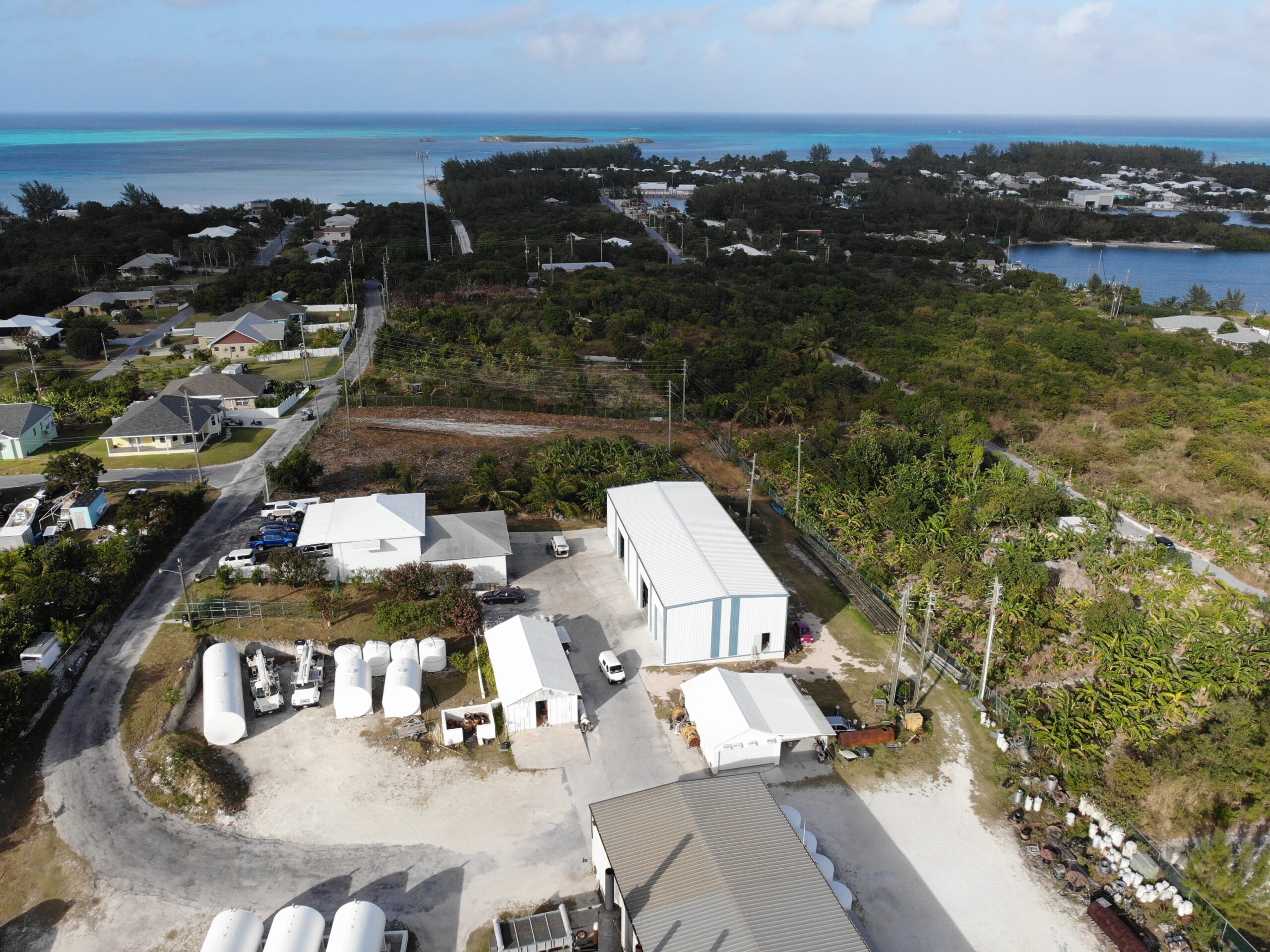
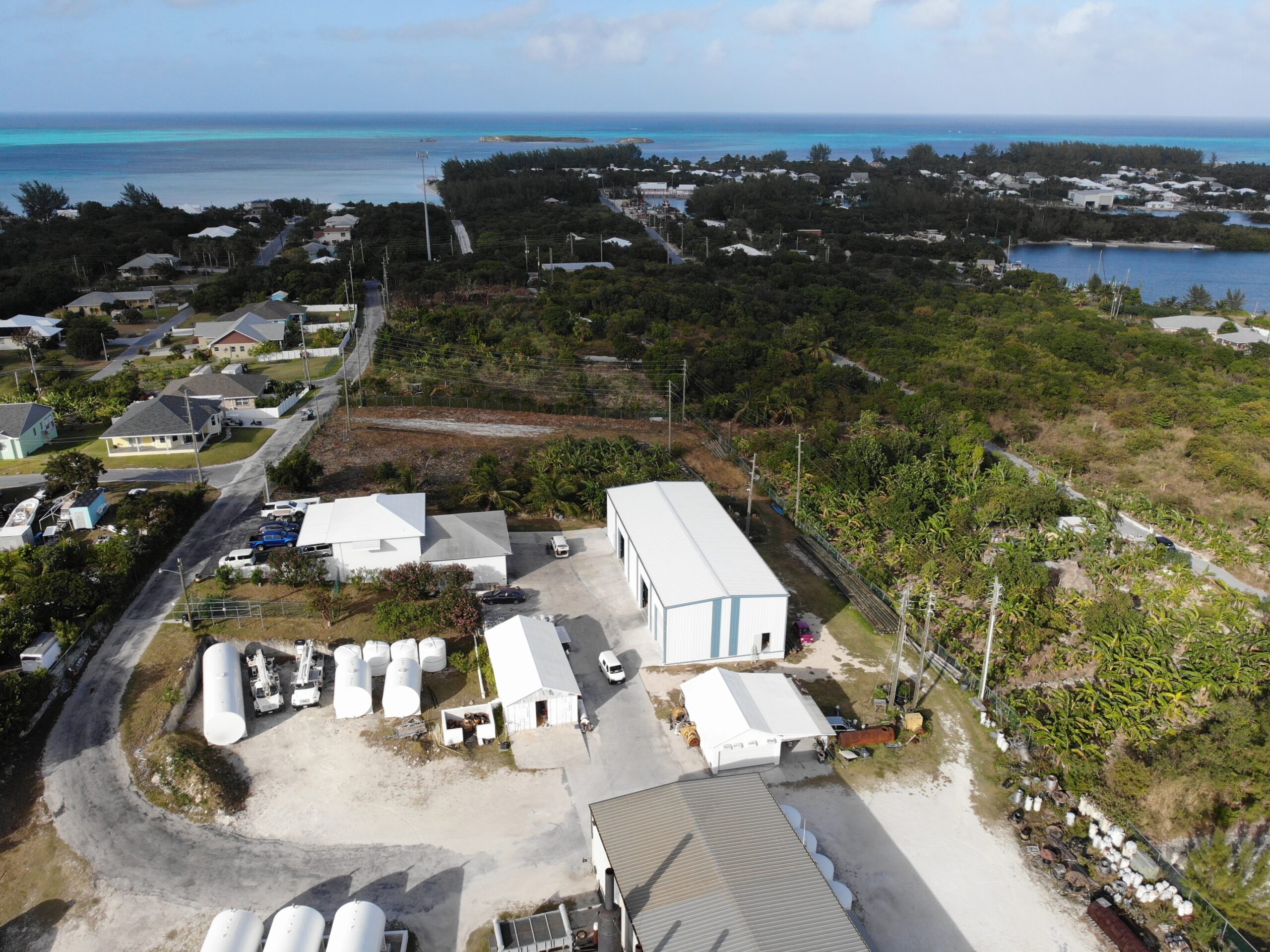
SGCPC is moving forward with building a solar farm next to the powerplant on Russell Island. This solar farm is PHASE 1 of our Solar Community Program. Phase 1 also may include a battery plant, or an Energy Storage System (ESS).
Phase 1 will be complete in 2025 or early 2026.
PHASE 2 of Solar Community includes the installation of SGCPC-owned solar energy systems on the roofs of Customers’ buildings that are connected to our grid. Land is limited for building more solar farms and land costs are high on Spanish Wells and Russell Island. Because of this land shortfall, SGCPC intends to install and operate PV systems on the roofs of commercial (and possibly also residential) buildings.
The Phase-2 installations will also begin in 2025-26.
- SGCPC will own, engineer, and install the solar-energy systems on our Customers’ premises.
- We will follow industry best practices in the design, equipment selection, and installation quality control.
- That includes a structural analysis to ensure the building and the solar system can support the loads during a hurricane.
- Engineering by a licensed engineer and installation by a licensed electrician are critical parts of the survivability of these systems.
- Selecting products and installation techniques that are shown through engineering analysis to withstand 180-mph winds and site conditions.
- Designing equipment selection for high salt-mist corrosion to extend life cycle and performance.
- SGCPC will pay an annual lease fee to the property owner.
- The lease rate is based on the power capacity of the system.
- The lease rate in 2025 ramps down based on how much customer-hosted / SGCPC-owned solar is installed in the community. Early adopters receive higher payments based on a fixed, block-capacity schedule.
- SGCPC will pay all capital investment and operational expenses for the solar-energy systems.
- This includes liability insurance. Insurance is necessary to help protect neighbors from risk particularly during a hurricane.
- Continue to deliver outstanding reliability and financial performance for everyone in our community that is better than other solar-energy options that benefit only the system owner.
- The financial performance will be evaluated on the ability to maintain or reduce SGCPC operating expenses and ultimately continue to be able to reduce Customer rates.
PHASE 3 will include more land-based Solar plus ESS installation for energy storage and grid stability.
Solar Community is a major investment in our community by SGCPC that will benefit ALL Customers.
- Reduce the cost of electricity for all SGCPC Customers, and not just those that can afford their own solar-energy plant.
- When a Customer installs their own solar-energy system at their home, over time that can cause the cost of electricity for everyone else to go UP. The fixed cost of generating electricity, such as maintenance of the powerplant equipment and our top-notch front-office team have to be paid by less electricity generated … making the cost of electricity go up.
- Establish more consistency in the rate of electricity.
- The cost of electricity is directly linked to the cost of diesel fuel. When the fuel price cost goes up, electricity prices go up; when the fuel price goes down, electricity prices go down.
- More “utility-scale” solar energy in the SGCPC grid, owned and managed by SGCPC, will result in less reliance and less fluctuation resulting from changing fuel prices.
- Solar energy at the utility scale reduces the risk of environmental damage from fuel spills and reduces air and noise pollution from the operating generators.
- Solar energy reduces our dependence on foreign oil and keep more of our hard-earned money in our community and in the Bahamas.
- The solar-energy industry creates local jobs and careers.
- Solar Community will help us achieve our goal for the Bahamas to reach 30% of our electricity from renewable sources by 2030.
We look forward to building the future together. Thank you for your support.
Morris Pinder; President and General Manager.
CUSTOMER-OWNER SOLAR & BATTERY
The Bahamas 2024 Electricity Act mandates all Bahamian electrical utilities to reach 30% renewable energy by 2030, and to allow utility Customers to install their own solar-energy systems.
SGCPC supports this effort – however it is urgent and important that all Customer installations on our islands apply to SGCPC for connection to the grid, submit to Town Council for their approval, and secure a permit from Ministry of Works. These are the same laws that apply to every Bahamian citizen on every island for every type of electrical construction. Solar energy does not get any exemption from the law, no matter what anyone might say. These reviews and approvals will help make sure your PV system is safe and meets Code and local requirements.
This section provides the information you will need to get your solar-energy system legally connected to the grid. If you want an electric meter and connection to the grid, you must comply with these URCA-mandated-and-approved rules.
Customers also have the option of an “off-grid” system. This is a PV System that powers the entire residence from the sun with no grid connection at all. In this case, this Customer doesn’t have to comply with SGCPC rules. This off-grid Customer now has to apply to URCA for approval, and still needs to get approval from Town Council and a permit from Ministry of Works. But with no SGCPC meter, there is no SGCPC approval.
HOW TO PROCEED?
Any Customer can call us to talk about the process and what you want to build. There also is a “buyer’s guide” in the Resources section to help you start to learn more about buying solar energy for your home.
Please review the documents on this site under the “View Documents” link below. That will take you to the Resources page. Start with the Grid Interconnection Requirements (GIR). The submission and approval process is explained there as a flowchart in Section 3. The customer-owned PV System size limits are detailed in Section 2 of the GIR.
A solar-energy system is a big investment. SGCPC encourages Customers to invest the time to understand what they are buying. Don’t take someone else’s word for it, because there is a lot of misinformation in our community about what is legal or not.
DEFINITIONS
- ”Photovoltaic” literally means electricity from the sun and is abbreviated as “PV” and is used as “PV Module (often called a “solar panel”) or PV Inverter.
- Energy Storage System is abbreviated as “ESS” and typically includes batteries for energy storage paired with power electronics and control systems for converting the DC to AC and the AC to DC. Self-contained ESS permanently connected to a building’s electrical system are required to be UL-9540 listed and installed in compliance with that listing and NFPA-855.
- A “PV System” is a solar-energy system that is normally connected to the grid, or “grid tied”. The PV System can include an ESS or not. Without the grid provided by SGCPC, a PV System without ESS would not turn on and would turn off instantly if the grid failed. Should the grid fail, a PV System with ESS can still provide power and energy to the premises isolated from the grid.
- “Off-Grid” systems are allowed. These would consist of PV and ESS and have no meter or connection to the grid. Customers desiring to install an off-grid system will require written approval from URCA. An off-grid PV System is not allowed to run an onsite generator unless there is an emergency and the grid is not operational. This is outlined in the 2024 Electricity Act. A lack of sunshine or dead batteries are not an emergency, and off-grid Customers may be reported to URCA by their neighbors if they are running a generator without a grid-wide emergency.
Do you have a PV System at your home that you installed without SGCPC approval? Now that URCA has issued the approved Renewable Energy Plan (REP) for SGCPC, you will have to get that PV System approved to operate. There is no “grandfathering” in any way. All these approvals are required, and all of the Grid Interconnection Requirements apply – just like installing solar energy on any other island in the Bahamas that is served by a utility company. You will need various information to submit to SGCPC, Town Council, and Ministry of Works. For SGCPC, please refer to the Grid Interconnection Requirements (GIR) and Grid Interconnection Application (GIA) on the Resources page. The GIR includes limitations on total grid solar power capacity and individual residence power capacity.
We recommend you call your installer and ask for a copy of the permit and make sure you have your original installation drawings that came with the PV System. If there is no permit, you don’t have drawings, or if your installer doesn’t answer your calls, you can find an engineer through the Bahamas Professional Engineer’s Board. Their website is https://pebahamas.org. If you want to talk with us about the process, please email, call, or stop by our office.
Please note that the electrical distribution system including the Customer meter, is owned by SGCPC. The Customer owns the premise wiring starting at the meter enclosure.
Prior to July 2025 our meters did not have the capability to measure delivered and exported energy separately and exported energy literally caused the meters to spin backwards. But we are replacing all meters with “bi-directional” meters so the delivered and exported energy can be tracked and compensated.
For new Customer-owned solar-energy systems – the forms necessary for Customer-owned systems are available at our offices during business hours or here.
Owners of unpermitted, uninspected, and unauthorized solar energy or battery systems will be notified in writing. To maintain safety and reliability, those Customers violating the regulations or refusing to follow installation requirements will ultimately be disconnected from the grid.
Yes, it is inconvenient and may be difficult to get your system approved – particularly if it is not in compliance with the building or electrical codes. But it is necessary to maintain safety for you, our technicians, and your neighbors.